Yay! The Comcast Outdoor Film Festival, North Bethesda, MD is such an awesome annual event. Not only do viewers get to enjoy 10 days in a row of great movies for adults and children alike but it's free! That's right! You get to sit outside under the warm night sky and watch a great movie with hundreds of your closest friends! Let me explain a bit more of how the film festival program works.
The grounds are open to the public but nothing is available to eat or drink until 6:30. Local restaurants and patrons provide all kinds of goodies from hot dogs, pizzas, cotton candy and ice cream! And the local restaurants include names like Baja Fresh and Hard Times Cafe! How awesome is that? Great movies and quality food! I know what you're thinking - but it's supposed to be free! Well, you'll be happy to know that part of the proceeds are going towards a great cause. Comcast has teamed up with a number of different charities and are donating a portion of the proceeds to the NIH Children's Charities - Children's Inn, Camp Fantastic/Special Love, and Friends of the Clinical Center. If that won't make you buy more popcorn, I don't know what will.
The movie itself starts at 8:30 and that time stays the same for each day the film festival is showing a movie. There are a few things to keep in mind when planning on coming to a showing. Try to be there early! I would suggest being there within an hour but no later than a half hour before the movie. Parking has become a bit of a problem. The past few years the public was allowed to park at the metro right next to Strathmore Hall (the location of the film festival) and is right off of Rockville Pike. However, last year, the only way you could park in there was to buy a metro pass. Although that is an option, it might be better to park on the side street of the neighborhood within walking distance of the metro. This way, you won't have to pay a dime and will get five extra minutes of exercise walking to the field where the movie will be shown.
Also, because the Comcast Film Festival, North Bethesda, MD is held on a grassy field, make sure to bring a blanket or better yet, a low slung chair to watch the movie in. Make sure to get something portable so you won't feel the pains of lugging a huge chair back and forth from your car to the field. Also, a comfortable blanket and chair would be key since you will more than likely be watching a movie that's two hours long or more.
Anothoer note - I didn't notice a huge mosquito of fly problem but I would still suggest wearing an insect repellent just to be on the safe side. Because of all the food and drinks available, there may be a chance of getting bit and no one wants that!
Other than that, this film festival is great because it's free and they show great movies! Another plus is that they do show kids movies so it's great to take your whole family! The movies usually range from kids animation to classics to movies that are a bit more on the adult side. Make sure to check out the listing of what they are showing so you know when to take your kids before exposing them to a movie that may be a bit too adult for their taste. This year, there are a number of great films I'm sure you'd be excited to see, such as, Maltese Falcon, Madagascar, King Kong, Walk the Line and my ultimate favorite, Batman Begins. I can't wait to watch The Dark Knight on the big screen once again!
The complete 10-day movie listing can be found on the following website: www.filmfestnih.org. Included on this site is a phone number if you have any further questions, however, the website should be able to answer any questions that you may have.
Make sure to take advantage of this film festival as it's only over the course of 10 days and it's only one time a year! Don't miss it! See you out there!
Wednesday, March 16, 2011
2006 Comcast Outdoor Film Festival!

<i>1,001 Movies You Must See Before You Die</i> a Must-Read for Film Buffs
Cinema is an art form that's over 100 years old. Hundreds of thousands of films have been produced of all shapes and sizes and of all genres all over the world. As lovers of cinema, we are often confused and dumbfounded as to which films to watch. As an answer, Stephen Jay Schneider and a group of film critics and theorists around the world put together this compilation of 1,001 culturally, technologically, artistically and historically significant films.
Arranged in chronological order and covering over 100 years worth of history in film, from the early 1902 Georges Milies science-fiction film "A Voyage to the Moon" to last year's Oscar Best Picture winner "Million Dollar Baby", the book covers a very wide range of forms and genres of film: From huge Hollywood epic spectacles like "Gone with the Wind" and "Spartacus" to gritty independent pictures like John Cassavetes's "Faces" and Samuel Fuller's "Shock Corridor"; from famous mainstream blockbuster features like "Titanic" and "Jurassic Park" to obscure, daring short films like "Blonde Cobra" and Luis Bunuel's "Un Chien Andalou"; from kid-friendly "Snow White and the Seven Dwarfs" and Disney's "Beauty and the Beast" to disturbing, daring films like "Salo" and "In the Realm of the Senses". Significant effort was made by the editors and the contributing writers to represent nearly every genre of film out there. In addition to featuring the well-known, highly regarded classics of horror, drama, comedy, science fiction, fantasy, etc. sub-genres as varied as Chinese kung fu movies ("Shaolin Master Killer"), blaxploitation ("Sweet Sweetbacks Baaadaassssssss Song") and mockumentaries ("This Is Spinal Tap") are also represented. Also impressive in this book is that it took the effort to feature significant films from all over the world even in countries which are not primarily known for their film industry like Senegal, Egypt and Jamaica. All in an apparent effort to cover as wide a range of the art of film as possible.
All the great directors, both of the past and of contemporary times, have several of their films on this book: John Ford, Steven Spielberg, Billy Wilder, Akira Kurosawa, Yasujiro Ozu, Luis Bunuel, Jean-Luc Godard, Pedro Almodovar, Martin Scorsese, Robert Altman etc. among others. Alfred Hitchcock has the distinction of having the most films with 15 from his oeuvre profiled. Each film is given an essay written by the various contributors detailing the film's significance, it's history and various interesting tidbits of trivia as well as a critique of the film in an intelligent non-pretentious or overly scholarly manner. Though the book is by no means perfect, the questionable inclusion of "Meet the Parents" is one of the more glaring of its flaws and arguments can be made for the inclusion and exclusion of several other movies, this book probably comes the closest to being the most definitive list available that's accessible even to the average film goer. Quite a number of films featured in this book are not currently available on video or DVD. Perhaps their inclusion in this book would help them get released on DVD and thus finding a wider audience.
Whether you are a budding teenage film buff or a veteran film scholar, there is plenty to love about this book which gives a straight-forward, non-snobbish take on film history that would make the art of watching movies truly enjoyable. This is the book all lovers of film should have on their bookshelves.
Art Without Attitude

here
One of the newest additions to the vibrant art scene in Philadelphia is WALLS at Wexler Gallery, an exhibit that features high quality, yet, affordable paintings, prints and photography. “It is New York sensibility without New York attitude,” says Lewis Wexler, founder and proprietor of Wexler Gallery. WALLS Curator Sherri Apter Wexler, wife of Lewis and co-owner of Wexler Gallery, is excited to offer Philadelphia art lovers great pieces of art without attitude and high price tags, and hopes that this concept will appeal to fresh young crowd of first-time buyers. WALLS made its debut during the First Friday in May, the once a month, widely attended cultural event hosted by the Old City Arts Association. This upstairs extension of the Wexler Gallery was meet with immediate success, selling several pieces in their opening night. “We really touched on something here,” says Sherri. WALLS is fresh, affordable and offers a relaxed and inviting atmosphere where questions are encouraged no one is too green to appreciate or buy art. This is a gallery where it is possible to walk in, see a painting that you love, and go home with it that day; all without putting a painstaking dent in your pocket. Presently, WALLS includes 8 artists, exhibiting four to five pieces each. The overall focus is on creative two-dimensional art that is both accessible and easy to live with. Current work on display ranges from $400 to $5,000. While many galleries offer a wide range of prices, with a few affordable selections, the mission of WALLS is to offer a large body of work that consists entirely of affordable art that will interest first time buyers, while maintaining a level of quality that will also attract and impress seasoned collectors. Artists currently on display include Chris Anderson, Jenny E. Balisle, Philadelphian Kevin Cooper, Daniella Woolf, Eileen Goldenberg, Tanja Softic, Mark Bennion and Lisa Tyson Ennis. One of the unique points of WALLS is that it feels more like a well decorated loft space that a gallery. The beautiful section of art is highlighted and enhanced by furniture and decorative pieces, giving the buyer an idea of how the painting may fit into an overall design scheme. These vignettes construct an inspirational visual field, sparking new ideas and create an innovative showroom environment. Additionally, both Sherri and Lewis are willing to help any buyer find the right piece and the right fit for their home. This new addition to Wexler Gallery has hit the ground running and shows no signs of slowing down. WALLS is an ideal complement to the Wexler Gallery’s collection of fine contemporary glass, studio furniture, ceramics, jewelry and decorative arts from some of the world’s most esteemed artists working today, including Wendell Castle, Albert Paley, William Harper and Dale Chihuly. If you are tired of staring at that bare wall, but though you could never afford real art or fit in into the prestigious art gallery scene, WALLS is a great place to start. The Wexler Gallery is located at 201 N. 3rd Street in Philadelphia, Pennsylvania. They were recently awarded the “Best in Philly” award for art gallery.
Friday, March 4, 2011
Popular Baby Name Websites

boston celtics baby clothes
Everyday there are children born all across the country. There are some parents who have a baby name already picked out for their child long before the delivery and other parents do not. When looking for baby name suggestions many parents end up purchasing a baby name book, but what many do not realize is that some of the same information can be found online for free.
There are a number of website owners who have provided lists of popular, unique, and religious baby names for boys and girls. This information is similar to what can be found inside a printed baby name book. As the internet is becoming more and more popular there has been an increase in the number of parents who are looking for baby name suggestions online. If you want to become one of those parents then you are encouraged to check out some of the popular baby name websites listed below.
Baby Names World is one of the most popular online baby name websites around. The website can be found by visiting www.babynamesworld.com. According to their website, Baby Names World has eleven thousand different baby names for boys and girls from all different origins. In addition to providing the origin of the baby names, there is information that tells the meaning of popular baby names. What is nice about Baby Names World is that you can browse through all of their baby names or search based on specific information.
Baby Center is an online resource guide for parents. They offer information that is valuable to parents including baby names. Their website can be found at http://www.babycenter.com/. Once at the main page there is a menu on the left-hand side and this is where the baby names link will appear. Once to the baby names section of their website you can search for information on a specific baby name or your can browse through their resources. Popular baby names and helpful information on selecting a name for your child can be found here.
1-2-3 Baby Names is another website that offers information on selecting a baby name and baby name suggestions. This website can be found by visiting http://123-baby-names.com/. 1-2-3 Baby Names offers names listed in alphabetical order. If you are interested in finding a name from a specific origin you can switch the option for all the baby names to be listed that way as well.
Think Baby Names is located at www.thinkbabynames.com. Think Baby Names is a website that is aimed at providing the meaning of baby names for boys and girls. In addition to providing the meanings of baby names, they list a large number of different baby names that can be helpful for many parents looking for baby name suggestions.
It is important to remember that these are just a few of the many online baby name websites. To find additional baby name websites you are encouraged to perform a standard internet search using the worlds baby names. There are an unlimited number of different baby names for both boys and girls. Using the internet is a great way to find these names without having to pay for it.
Sunday, February 27, 2011
Christmas Photography Tips and Advice

Photo Credit: celtics baby clothes
For Christmas photography tips, or any sort of photography, we want the best results to come from our time and effort. Christmas photography captures special moments, especially when children are involved. In fact, this leads to my first Christmas photography tip:
(1) Focus on the children first. This admittedly is a bias of mine, but Christmas foremost should be a children's holiday. This applies to gift-giving, and also to photography. If you disagree and/or if adults are at the center of your Christmas, fine, that's just my opinion. Just think of ol' Art Linkletter: "Kids Say the Funniest Things." Kids also make the best photo subjects, and regardless, Christmas (like Trix cereal) is for Kids.
Our Top Ten Christmas photography tips are going to relate to the strategy of taking the best photos, not to the type of camera. That's a whole 'nuther topic. In fact, yours truly is not even a shutterbug. My advice comes from working as a local daily newspaper reporter, among some of the best professional photographers, going back to the 1970s when they still used darkrooms, up to today in the digital age. These Christmas photography tips are geared toward how you interact with your subjects, once the camera is chosen and the lighting adjustments are made.
(2) Don't be one of these photographers who is constantly out front and interrupting things, asking people to pose. For your best Christmas photography, be the fly on the wall. Stay in the background and take candid photos of what's happening, photos in which the subjects don't realize you're taking their photos.
(3) A lower angle (shooting "upward" toward the subjects and the scene) often yields better results. Don't hesitate to sprawl on the floor.
(4) In your Christmas photography, look for sequences of events. A photo is just one moment in time and to capture a sequence, many folks nowadays prefer a video camera. Still, there's nothing like a series of photos. For example: (A) Child awaits anxiously for gift-giving to begin. (B) Child receives wrapped gift. ( C ) Child tears wrapping off of gift. (D) Child reacts to gift.
(5) In fact, your sequence of events could begin hours earlier. Child helps decorate tree. Child puts on Christmas outfit. Etc.
(6) Just because you're staying out of the spotlight with your camera, that doesn't mean you can't be persistent. Patience is a virtue in waiting for just the right moment, just the right shot.
(7) Be a minimalist. Don't try to illustrate the whole scene of the Christmas event at once. If it's a party, take turns focusing on individual participants, or no more than two or three in one frame. If your Christmas photography involves a group of carolers, go ahead and photograph the whole group, but also aim for closeups of one caroler, or a small group.
(8) If you still want some posed Christmas photography for the archives, that's fine. Try to do the posing at the conclusion of the shindig, not at the start or during the middle.
(9) For posed photos, try to keep the number of subjects small. Let's imagine the group of Christmas revelers is 20. Go ahead and shoot the group of 20, but keep in mind that with so many folks in there, their faces are going to be the sizes of dimes. Also shoot "subgroups" with three, four, five people.
(10) When people pose in groups, have them put their heads as close together as possible. This may seem like a minor point, but when you see the results, you'll understand. Faces can be 20 percent larger and up close if we eliminate the wasted space between their heads.
SOURCES
Personal experience
http://digital-photography-school.com/16-christmas-photography-tips
http://www.best-family-photography-tips.com/Christmas-pictures.html
http://photography.about.com/od/christmas/Christmas_Photography.htm
Using Depth of Field for Photography
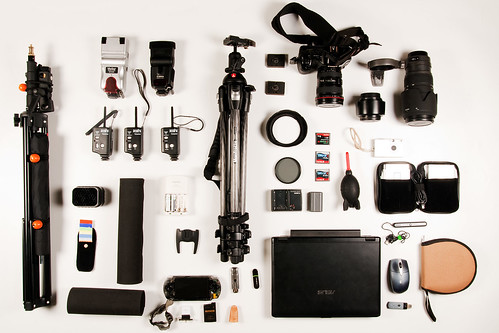
photo source
It's one of the greatest tools available to photographers, it's easy to use, and yet it's among the least known and used abilities of a camera today. Pro photographers have used it for decades, but the amateur can use these same techniques without paying the professional price. It's called depth of field, and it's accessed through the use of the aperture.
The aperture, simply put, is the hole that light comes through in your camera. Light passes through the front of the lens, through a series of glass pieces, through a hole at the back of the lens, and into the camera. The aperture is the hole in the back of the lens, and you get to control this vital part of the camera, if you decide to want to bump up your pictures. You can place the camera on auto, and the camera will adjust its aperture, shutter and more to the situation it sees. By placing the camera in more manual modes, you take on powerful and personal control, and YOU get to decide what you want to create with your photographs.
An important factor here is lighting. Any photography relies heavily on the lighting that you are using, whether it be from the natural, ambient light around you, or artificial light, like a strobe or other flash unit. Especially while using natural light, it will be important to use a tripod to keep the camera steady while shooting. If you are shooting on a cloudy day, without much light, then the camera must compensate for less light by having a longer shutter speed, which it will do automatically in the mode I'll be explaining in a moment. A longer shutter speed means the camera won't be able to have a clearly focused picture without the use of the tripod.
Depth of field simply means the area of focus, or the area in the picture that is in focus might be a more accurate term. Photography is a two dimensional medium, having height and width, but it lacks depth, the third dimension. Your photography can create the illusion of that depth through a few easy camera settings. You may be asking yourself, why would I want to create the illusion of depth, and what is it good for? Part of the reason is to create a sense of emphasis. When you take a picture of a large area, with trees, birds, squirrels, people, rocks, etc, what is the thing or object that you are zeroing in on? Is there anything that you really want to emphasize to your viewer? If so, it's probably getting lost in the crowd of other things on the scene. The squirrels are so small you can barely see them, the people are walking their dogs, and the trees are swaying in the breeze. But what if you wanted to focus on the viewer on the flowers in the garden? When you create emphasis on an object, it strengthens your photo, and actually guides the eye of the viewer to that object. You could take pictures to create a story about that, as you can read in my article about photo stories. When you get in to take close-ups of the flowers is where the possibilities of great photography begin.
Emphasize the garden by focusing in on one or two flowers at a time. Grab a tripod, get down to eye level with them, and then get ready. Place your camera in a mode that allows you to change your aperture; the mode is usually called "A", or "AV" on some models. Film cameras can allow these changes too, on SLR models. They require you to simply change the f-stop manually on the aperture ring. On your digital camera, use your selector buttons to change your aperture. You'll see on your digital camera, most likely, a letter f, with the number on the readout on either the monitor, or the info panel on the top of the camera, or perhaps both areas. The f means f-stop, which is the name commonly used to describe the number of the aperture setting. The best way to emphasize a flower is to have only that flower in focus, and to have the rest out of focus. Change your aperture to a really low number, such as 2.8, 4, or 5.6. When the lens is at a low number like this, the lens hole is wide open, but it is creating a small area or depth of field; basically an inch or two will be in focus. Focus your camera, and shoot. Now, look at the camera, and look at your pictures. The one or two flowers should be in focus, but do you see how the background is fuzzy and out of focus? This is what is called a "shallow depth of field", and that comes from using a small number f-stop. That's because you've taken control of your camera, and changed the outcome! Because only the flower is in focus, and the rest is blurred out, you have guided your viewer to what YOU want to emphasize! You have used one of the most powerful tools available for a photographer to bring a new focus to your pictures. Try this with a lot of different scenes; look how the item is forced to really stand out for you because it's the only thing in focus.
Now, on the opposite end of the spectrum are the pictures that have the entire photograph in focus; such as a lighthouse standing out from the beach, with horseshoe crab shells in the immediate foreground. This is also done by changing the depth of field of your camera. Here, you again change your aperture, but this time place it on a high number like 16, 22, 28, etc. This is to create a large depth of field by using a small hole in the back of the lens. Again, you must use a tripod to keep the camera steady. Take a picture with something in the near foreground, such as a rock or the crab shells, and then compose your picture with a mountain or some other object some distance away, focus, and shoot. Remember to use the rule of thirds here for additional emphasis. As you'll see, both areas should be in focus, again showing the third dimension and creating the illusion of depth. This is a large depth of field.
It's a little known tool in the photographer's toolbox, but almost any camera made in the past four years will have some sort of ability to work with depth of field, whether they have a point and shoot or DSLR. Every photographer, of every level, has the ability, through practice, to create beautiful photographs that can rival those of the pros, by using the tools available with every camera. Use the strength of depth of field when you create the third dimension in your photographs, and add a new and incredibly
powerful personal dimension to your photography.
Saturday, February 26, 2011
10 Great Tips to Make Any DIY Winter Wedding Photography Successful!
source,photo source
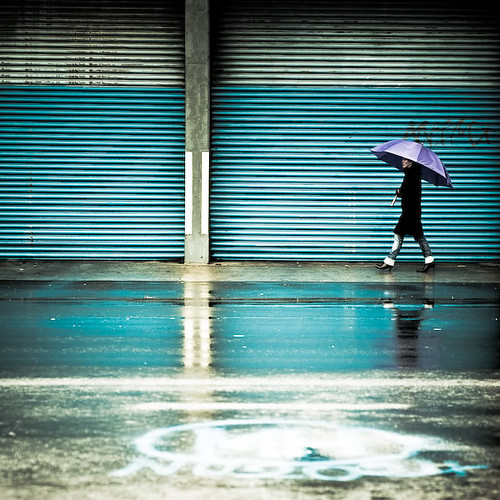
This winter many couples are choosing do it yourself wedding photography in an attempt to save money. Wedding photography is tricky because if not done right there will be no good documentation of the special day. My dad does wedding photography as an amateur hobby; wedding photography is not skill less, but can be done easily with practice by almost any amateur photographer. This article will take a look at 10 tips to make DIY winter wedding photography successful; however keep in mind DIY wedding photography takes copious amounts of editing after the ceremony.
1. Camera
Taking wedding photographs should be done with the right camera, not a regular point and shoot camera. I recommend using the Canon EOS Digital Rebel XTi, it takes high quality pictures and is relatively easy to use. This camera can be found at www.buy.com for $569.95, but you should check to see if anyone in the wedding party can provide this camera or a similar model to save on money.
2. Flash
Relying on the built in pop up flash in any camera is a recipe for failure; you will want to use an external flash for low lighting pictures, such as a church or an evening reception. Winter conditions outside will not require a flash due to the reflection of the snow, but it can be used if done right; however inside you will want a powerful flash. I cannot give a recommendation because certain flashes work for different cameras; therefore the flash will be determined by your digital camera choice. www.ritzcamera.com has a good variety of flashes, lenses, and cameras.
3. Lenses
Unfortunately DIY picture taking is not cheap and requires the proper zoom lenses for great photos from anywhere in the room. Buying any secondary lenses is not necessary, but they will make the pictures better. www.ritzcamera.com has a good selection of lenses; it is where I purchased mine.
4. Go Digital
The hardest part of DIY wedding photography is getting professional looking shots. Going digital allows for touchups on the pictures after they are taken so that they come out perfect. Going digital also saves on prints since all the photos can be saved on a flash drive or a CD.
5. Choose an artistic guest for the job
Capturing the right moment is what photography is all about; having a guest that is willing to take pictures who has an artistic eye is the best way to get quality shots. Do not expect a gift from the photographer as it takes hours of work to take and edit great shots.
6. Be aware of lighting conditions
Winter is the hardest time of the year to take photographs outside due to the reflective nature of snow and the brightness of the sun. Be creative on the angles of your photographs; many high end cameras also show the contrast ratio on the photos taken, look at the contrast to make sure the photos are coming out correctly.
7. Be aware of where the sun is
Do not shoot towards the sun or objects that are in the sun, it can cause shadows and some funky looking pictures. Just be aware of the sun and preview one or two pictures before taking more.
8. Capture photos with the theme
If your theme is a winter wonderland then capture that theme in the photos! Try to include shots of the bridal party and newlyweds in the natural theme of the wedding; also try to include guests in the same theme. Be creative with the shots, you may have to shoot at different angles to get the desired results.
9. Use the flash
Even in snowy conditions you should experiment with the flash for better pictures, the bright the background the more the object you are photographing will stand out. This may not always be the case; therefore you should check the pictures being taken to make sure they are coming out professionally.
10. Edit, Edit, Edit
No DIY photography is complete up completion of the ceremony! There are countless hours of editing that must be taken on to get professional looking results. If you do not have the proper computer skills try to find a guest that would be willing to help edit in exchange for their wedding present.
This site has some extra DIY tips that can help during a winter wedding; I did not cover many these tips, so it may be a good read: http://www.squidoo.com/weddingphotographyguide
Sources:
www.ritzcamera.com
http://www.squidoo.com/weddingphotographyguide, DIY Winter Wedding Photography